Codie Lavoie
Codie Lavoie, 2015 BC Aboriginal Student Award recipient
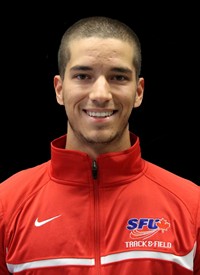
Pursuing a career in medicine is expensive, time consuming, and extremely difficult. For Codie Lavoie that journey was made a little easier this year with a BC Aboriginal Student Award in the amount of $3,500.
Starting down the long path of becoming a doctor is not a decision to be taken lightly but for Lavoie, a career in medicine is inevitable.
In 2009, Lavoie was diagnosed with Stevens-Johnson Syndrome (SJS), a life-threatening and rare skin condition that put him in intensive care for a month. Through his interactions with several doctors and nurses, Lavoie saw how healthcare practitioners can shape a patient experience and realized that he too wanted to be able to help and positively impact people that way.
It wasn't just the overcoming of such a serious personal health issue that sold Lavoie on a career in medicine. In 2009, he also had the opportunity to visit to rural villages in Kenya that exposed him to the fragility of life in other parts of the world. Following that, he had the opportunity to serve his own father in the emergency room while on a student internship at a local hospital.
"Keeping my friends and family safe and helping to address the health crisis in other parts of the world is a job I was born to do," says Lavoie.
Lavoie got to see first-hand how being a doctor can completely alter the patient experience and the outcome. He made the decision to become a doctor and hasn't looked back since.
Currently in his final semester of his Bachelor of Science in Behavioural Neuroscience at Simon Fraser University, Lavoie has had to become a master of time management to get through the barrage of exams, applications and entrance requirements for medical school.
Coming from a small rural town, Lavoie expected to easily adjust to life at University. He was surprised at how difficult it actually was.
"It was hard to get good grades at first - I had to do a lot of trial and error," says Lavoie.
This exploratory time initially impacted Lavoie's GPA. As a hopeful doctor, Lavoie knew that he had to improve his grades in order to have any hope of getting into medical school. After two years, he found his interest, became better at managing his time and his grades improved.
Because of the expense and difficulty of medical school entrance exams and the MCAT (a seven hour long exam required before students can apply for medical school), the scholarship funds help Lavoie participate in a preparation course and pay for extra fees that student loans simply could not cover.
Student loans don't provide enough money for tuition, living expenses, and the additional costs associated with medical school. With the extra financial support, Lavoie is able to focus on his studies.
"I wish I would have looked at scholarships earlier," says Lavoie.
Despite being very busy, Lavoie - through practice - has found balance with time management and is patiently awaiting an acceptance letter for medical school.